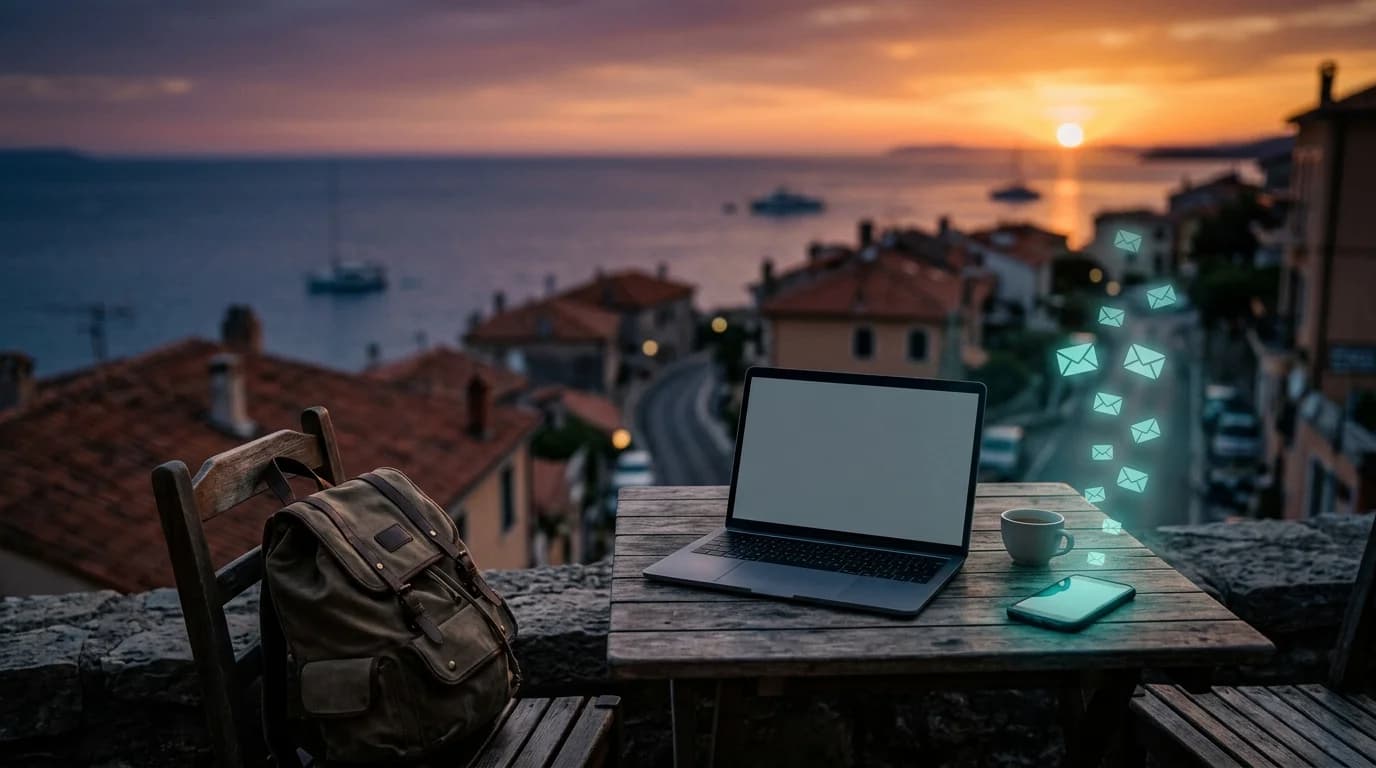
A digital nomad from Canada usually keeps a Canadian life on paper while living somewhere new every few weeks: a bank account, a credit card, a provincial driver's licence, a CRA account, maybe a business. All of those still send mail to a physical address. A virtual mailbox gives that mail one fixed, staffed address in Canada, scans what arrives, and lets you decide from your phone what happens to each item. This guide covers the practical side: what tends to arrive, what goes wrong, and how to set things up before you leave.
Most of your accounts are online, but a lot of what matters still travels by post. Replacement bank and credit cards are mailed. Some CRA notices and slips are mailed, especially if you have not switched every account to online mail. Provincial driver's licence and health card renewals often arrive by post. Insurers, investment platforms, and former employers send letters you need to read on time. None of that waits for you to come home, and much of it should not sit unopened in a friend's hallway for two months.
A staffed street address solves the one thing all of these miss: someone receives the mail on your behalf, tells you the same day, and acts on your instruction.
You choose a location and the address becomes your Canadian mailing address. When an item arrives, staff log it and you get a notification with an image of the envelope. From the dashboard or the app you decide: open and scan it to PDF, forward it to wherever you are staying, hold it, or shred it. Because you see the envelope first, you can skip opening junk and only scan what matters. Our page on mail scanning explains the steps, and the digital nomad page covers features built for frequent travel.
Bank cards are the item nomads worry about most. Hold the card at the location, then forward it to an address where you will stay long enough to receive it. You see the shipping cost before you confirm. Paper cheques can be held until you are back or forwarded to you; mobile cheque deposit through the platform is not available yet. For parcels, couriers deliver to a staffed counter and get a signature, so gear you order to Canada is received and kept until you decide where it goes.
A mailing address is where your mail goes. It does not decide your tax residency, your provincial health coverage, or which province issues your driver's licence. Those depend on where you actually live and the rules of each program, and provincial health plans in particular have their own presence requirements. If you plan to be away for a long time, read the rules for your province and the CRA guidance on residency before you leave, and keep the address details consistent with what you tell each organisation.
If you are moving abroad for good rather than travelling, our guide for Canadian expats covers the longer-term setup, and receiving mail without a permanent address explains the options in general.
Yes. A virtual mailbox gives you a staffed street address in Canada where your mail is received and scanned, so you can read it and decide what to do with it from anywhere.
Pick the location that makes sense for your paperwork and for any pickups, often the city where your family, accountant, or business contacts are. Mail is read online either way, so you do not need to live near it.
Yes. The card is received at the location, and you can forward it to the address where you are staying. You see the shipping cost before you confirm.
No. Residency for tax, health coverage, and licensing depends on where you actually live and each program's rules, not on your mailing address.
Depending on your plan, you can add other recipients to your mailbox, so mail addressed to them is received and handled in the same dashboard.